
Experience the perfect balance of chewy, translucent sweet potato glass noodles (Dangmyeon) and a vibrant rainbow of stir-fried vegetables and tofu in this delicious, 30-minute vegan Japchae.
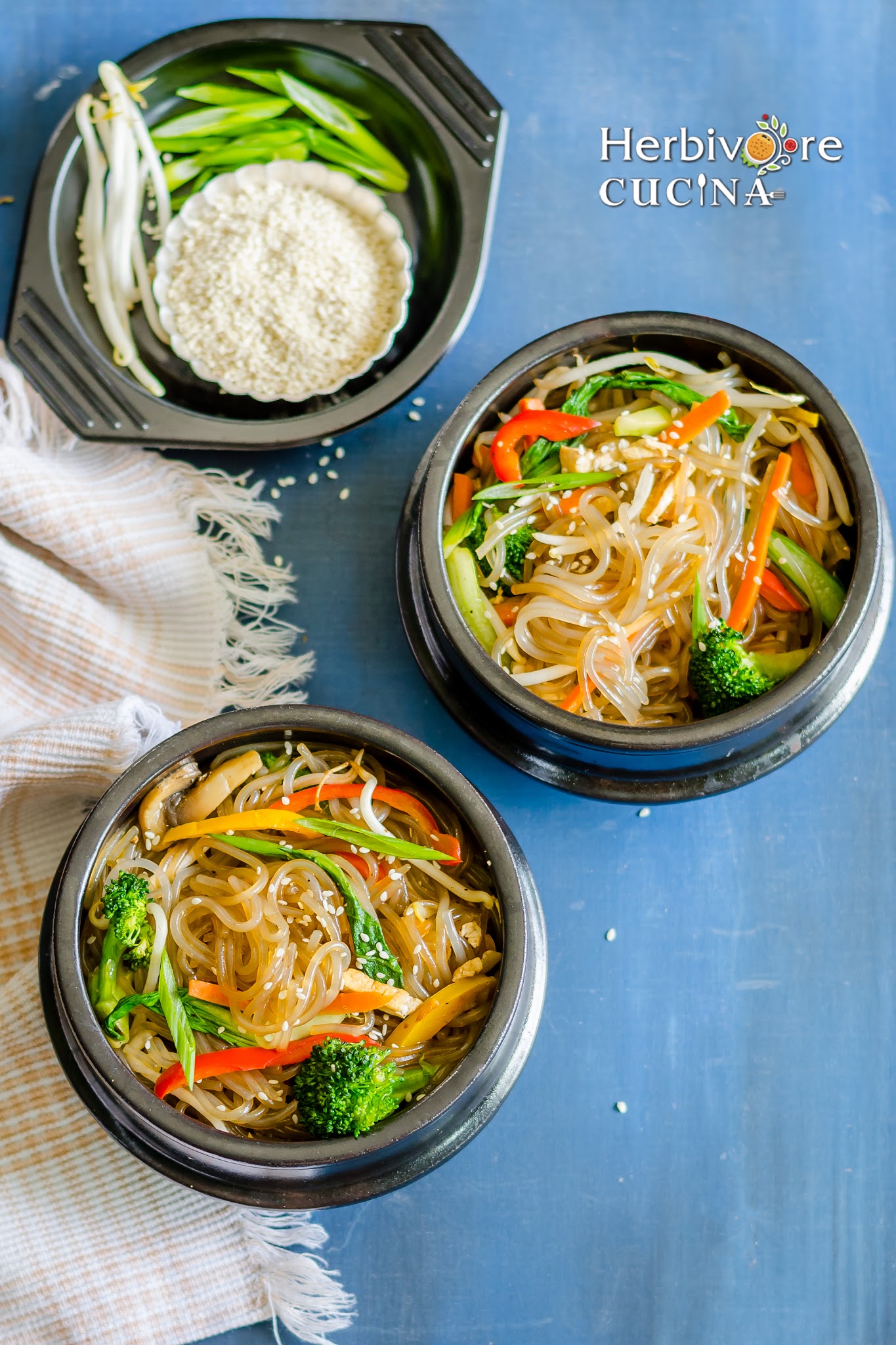
Asian cuisine is definitely one of the loved cuisine in so many households. Once we have some ingredients and sauces it is so easy to whip up different dishes using them.
It is great for weeknight meals and for meal prep. Whether you are making this stir fry tofu or my popular Thai red curry with some steamed jasmine rice; it is so good for quick meals.
When we talk about Asian cuisine; it is no surprise that Korean recipes are quite popular. And so it is no surprise that everyone loves this Korean classic Japchae lately. And when you can small tweaks to make it Vegan and high in protein; it will definitely become a regular in your kitchen.
Jump to:
What is Japchae? (Korean glass noodles)
Japchae (잡채) is one of Korea’s most beloved and iconic dishes. The name literally translates to "mixed vegetables," which perfectly describes this vibrant, colorful stir-fry.
While it was originally created in the 17th century without noodles, modern Japchae is defined by its star ingredient: Dangmyeon. These are translucent "glass" noodles made from sweet potato starch. They have a unique, bouncy, and slightly chewy texture that absorbs the signature savory-sweet sauce beautifully.
This is popular to enjoy as a side (banchan) with Korean jjigae or my delicious vegetarian miso ramen soup. Or eat it as a complete dish right away or in the lunch box. It is generally made Vegan and topped with bits of beef but we are using tofu to make it completely Vegan.
Why You’ll Love This Vegan Japchae
- The Perfect "Bounce": We make this Japchae with sweet potato starch noodles (Dangmyeon) to ensure they are chewy and translucent, never mushy or clumping together.
- 100% Plant-Based Umami: By using a combination of seared mushrooms and toasted sesame oil, we achieve that deep, savory "meat-like" flavor without using any animal products.
- Gluten-Free & Nutrient-Dense: This recipe is naturally gluten-free (when using Tamari) and packed with a "rainbow" of fiber-rich vegetables, making it a healthy, satisfying meal that won't leave you feeling heavy.
- The "Protein Boost" Option: Unlike standard vegetable-only versions, I include my signature Air Fryer Tofu instructions. It adds a crispy, "meaty" element that turns this side dish into a complete, high-protein main course.
Ingredients and Substitutions
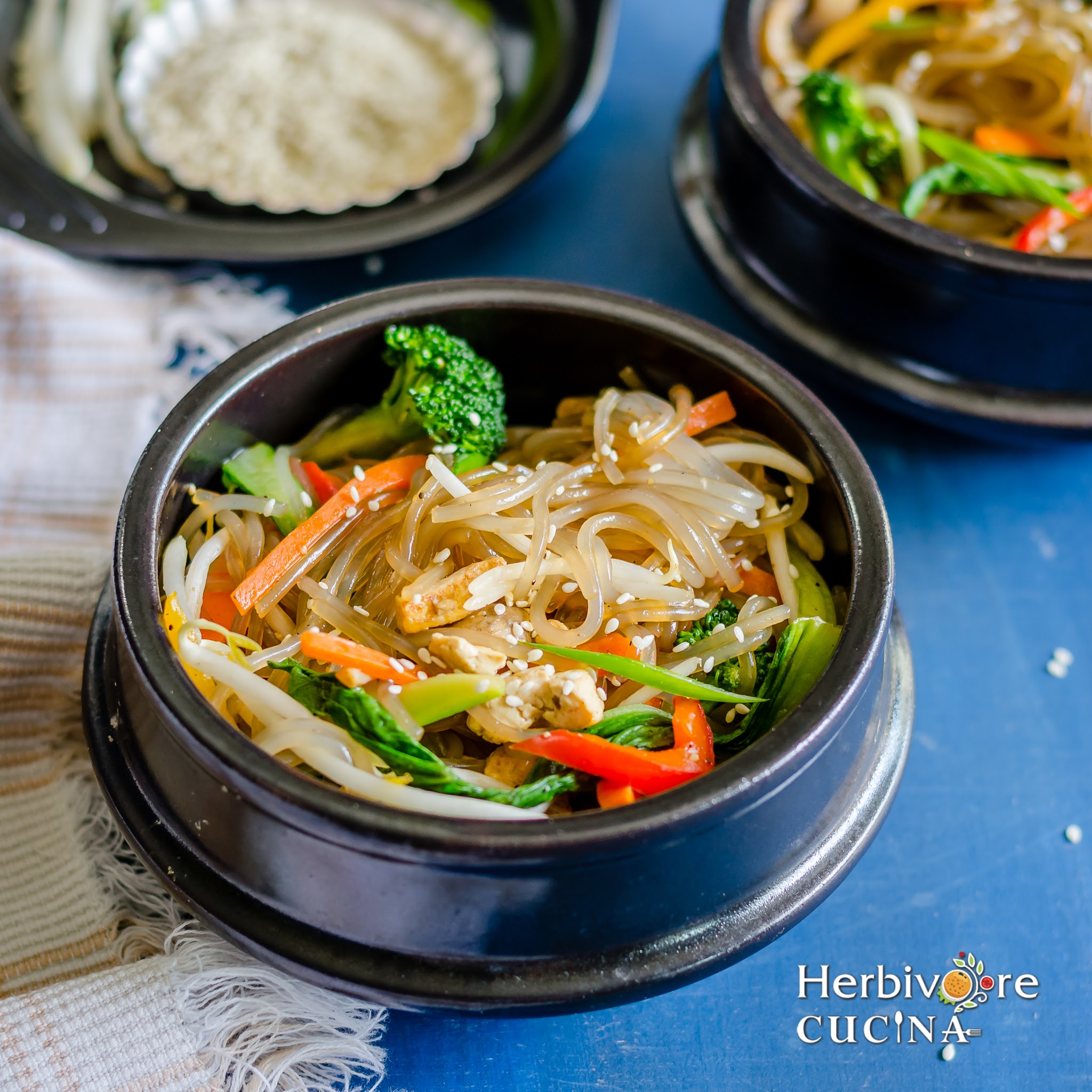
- Sweet Potato Noodles (dangmyeon): The "soul" of the dish. Unlike wheat or rice noodles, these are grey and opaque when dry but turn translucent ("glass noodles") when boiled. They provide a unique, chewy, and gluten-free base that absorbs the sauce beautifully.
- Vegetables: A mix of colorful vegetables is great for this recipe. Carrots, mushrooms, broccoli, peppers, bean sprouts and bok choy are great. Add vegetables you have at hand while maintaining colors and crunch.
- Tofu: It is easy to swap out beef from the japchae with extra firm tofu for a meatless japchae recipe. Remove the extra moisture to keep the dish dry. We sauté it in oil before adding to keep the shape and make it slightly crisp. .
- Sauce: Soy sauce, vinegar, sesame oil and a little sugar is perfect for the sauce. Together these make a balanced sauce for the recipe. Plus, some salt and pepper to season the dish.
- Oil: Like most Asian recipes, sesame oil is great in the recipe. Use another oil if you absolutely have to. Perilla Oil is a great nutty oil for the recipe too.
- Toppings: Toasted sesame seeds are great for crunch. Along with that I like to add some green scallions too.
See the recipe card for detailed ingredient information, measurements and nutrition.
How to make this recipe
1- In a large pan heat 6-7 cups of water. Once it comes to a boil, add the dangmyeon noodles.
2- Cook for 5-6 minutes till soft. Using clean kitchen scissors, cut the noodles to smaller pieces. In about 8 minutes, the noodles will be cooked.
3- Remove, rinse with cold water and drain completely. Add some toasted sesame oil and toss to ensure the noodles do not stick. Set aside.
4- Cut all the vegetables into thin slices. Set aside. Also mix all the ingredients for the sauce and keep aside.
5- Heat oil in a wok and add the chopped tofu. Let it lightly brown on all sides. Remove the tofu and set aside.
6- In the same wok add the remaining oil. Then add the garlic and sauté till fragrant.
7- Next add the onion, peppers and sauté for a minute.
8- Then add broccoli, carrots and cook for a few minutes, till tender.
9- Finally add bok choy and cook till it is wilted.
10- Then add the prepared sauce and mix.
11- Add the cooked noodles and toss well. Cook for a minute and turn down the flame.
12- Add bean sprouts and spring onion greens. Mix well. Sprinkle sesame seeds and serve immediately.
Serving Suggestions and Storage
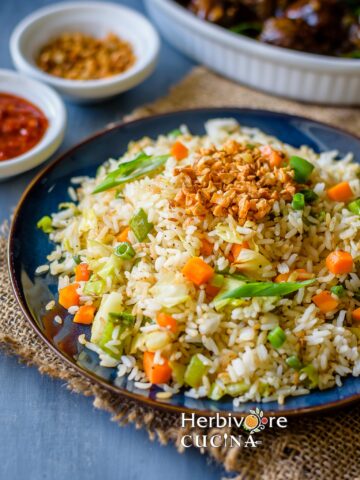
Japchae is perfect to enjoy right away or later. It is so good as a complete meal or as a side. If you like this with a rice side, do not forget to try my burnt garlic fried rice recipe. Plus, it is also amazing with this schezwan noodles.
We can also enjoy japchae as a side dish (banchan) with a bowl of my steamed jasmine rice or instant pot brown rice. Or enjoy it with the more traditional Korean jjigae or this miso ramen soup.
Japchae tastes amazing when hot as a main dish, at room temperature as a side or fridge cold the next day. So do not discard the leftovers. Simply pop into air tight containers and refrigerate. Japchae stays fresh in the fridge for up to 4 days and makes a great meal prep recipe.
To reheat simply toss for 30 seconds in a hot pan with a splash of water to "revive" the glass noodles' bounce. Or microwave the noodles till they are chewy and fresh again.
We can freeze japchae well. Simply freeze room temperature japchae in air tight containers for up to 2 months. To reheat, simply add to a teaspoon of hot oil and a splash of water in a hot pan. Or steam them for 5-6 minutes to avoid the extra oil.
Substitutions
The recipe uses a combination of ingredients including the sweet potato noodles, sauce and vegetables. Here are some quick substitutions.
- Sweet Potato Noodles (dangmyeon): These are easy to replace with mung bean noodles. Moreover, we can make the same recipe with Thai rice noodles, udon noodles or even ramen noodles.
- Sugar: Replace sugar with maple syrup or honey. Honey will not keep the recipe Vegan. Maple syrup dissolves instantly into the cold sauce and adds a subtle woody depth.
- Soy Sauce: Use Tamari for a 100% Gluten-Free version; use Coconut Aminos for a lower-sodium, soy-free option.
- Tofu: If you would prefer another protein, simply add pan fried or air fried paneer. Marinate in soy sauce and hot sauce if you like.
- Toasted Sesame Oil: A traditional Korean alternative that provides a distinct, nutty, and herbal aroma, Perilla Oil works well too. Or use any neutral oil of your choice.
- Make it spicy: While not authentic, it is great to add a dash of Schezwan sauce to japchae. It makes the recipe spicy and delicious.
Expert Tips and Notes
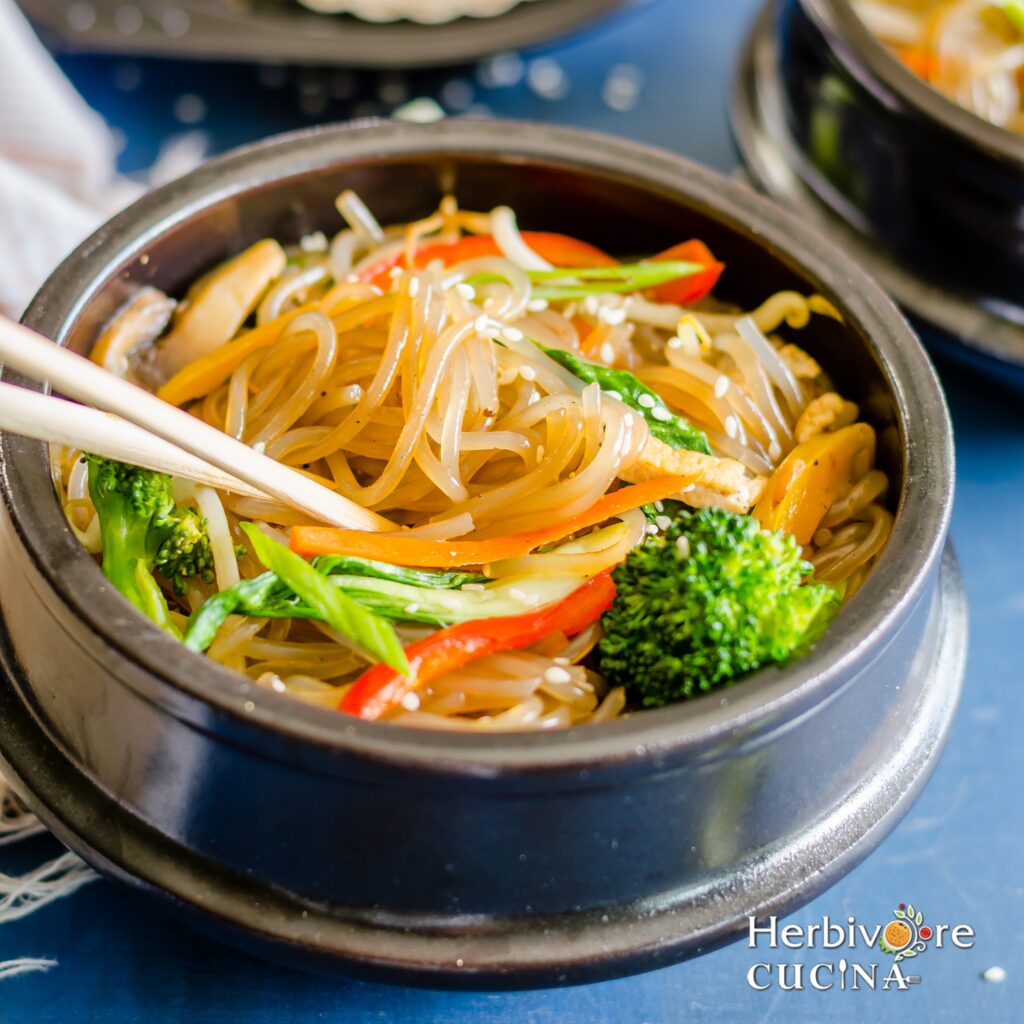
- Don't Overboil: Treat sweet potato noodles like pasta—aim for al dente. They should be translucent and flexible but still have a firm "snap" when bitten.
- The Rinse & Coat: Immediately after boiling, rinse the noodles in cold water to stop the cooking process and remove excess starch. While they are still damp, toss them with a teaspoon of toasted sesame oil. This creates a barrier that prevents them from clumping while you prep the vegetables.
- Air Fryer Tofu for Japchae: To get that "meaty" bite without deep-frying, toss extra-firm tofu strips with 1 teaspoon cornstarch, 1 teaspoon soy sauce, and 1 teaspoon toasted sesame oil. Air fry at 200°C (400°F) for 10–12 minutes, shaking halfway through. These "chewy" strips perfectly mimic the texture of the glass noodles.
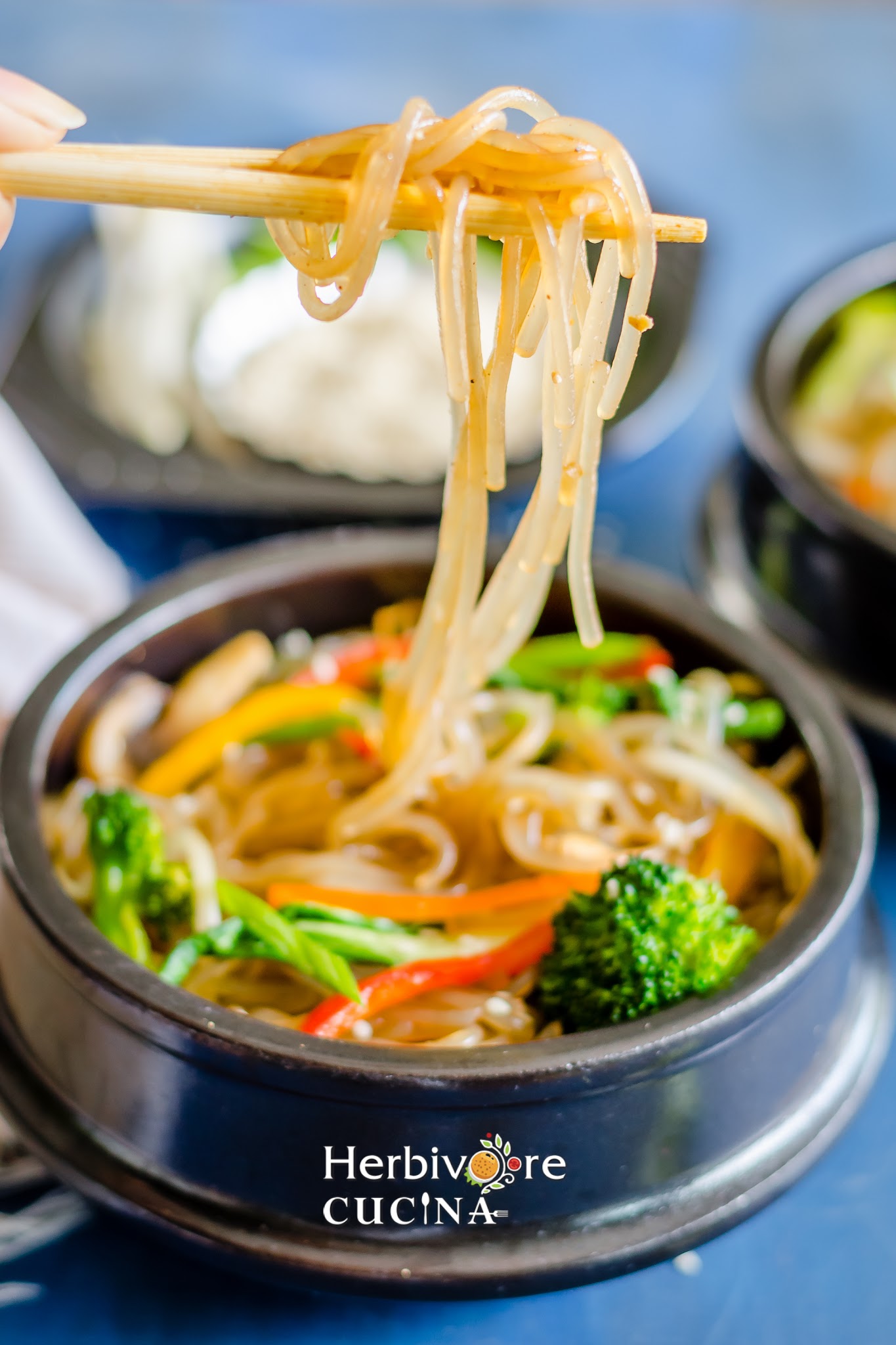
- Don't forget to cut the glass noodles: Most sweet potato noodles come as super long noodles in packets. It is difficult to cut them when raw. Use a clean pair to scissors to cut them short once cooked. Without this step japchae is almost impossible to eat.
- The "Final Season": Taste the dish once everything is combined. Japchae often needs a final "adjustment" of sugar or soy sauce right before serving, as the noodles continue to absorb flavor as they sit.
Recipe FAQs
Japchae is incredibly versatile! It can be served warm immediately after stir-frying, at room temperature, or even cold from the fridge. In Korea, it is a popular banchan (side dish) often enjoyed at room temperature.
The noodles themselves (made from sweet potato starch) are naturally gluten-free. To make the entire dish gluten-free, simply ensure you use Tamari or Coconut Aminos instead of regular soy sauce.
Yes for sure. The sweet potato noodles tend to absorb the flavors of the sauce as they sit. And once prepared we have the option to serve it warmed, cold or fridge cold.
While the base of glass noodles and vegetables is vegan, many traditional restaurant recipes include thinly sliced beef or a garnish of egg strips (jidan). This recipe replaces the beef with savory Shiitake mushrooms and crispy tofu, providing the same "meaty" texture while remaining 100% plant-based.
Because the base is made of sweet potato starch and a "rainbow" of lightly sautéed vegetables (like bok choy, carrots, and mushrooms), it is naturally gluten-free, fiber-rich, and lower in fat than traditional wheat-based stir-fries. By using tofu as we do in this recipe, it becomes a high-protein, plant-based powerhouse.
Love this Japchae? Try these next!
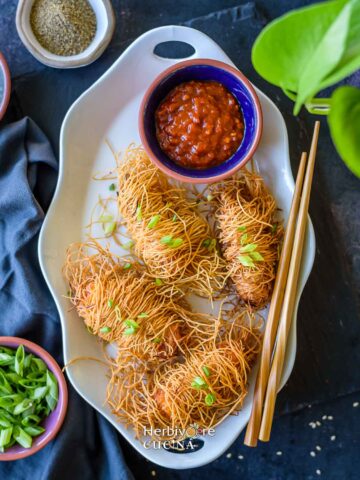
If you enjoyed these chewy, savory Korean glass noodles, you'll love these other quick and healthy vegetarian meals from my kitchen.


Love this recipe? Please leave a star rating in the recipe card below & if you REALLY like it, consider a review in the comments whilst you are there, thanks!
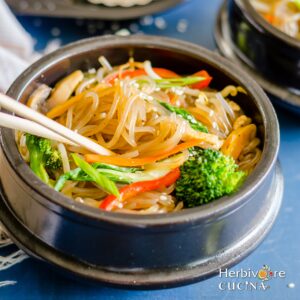
Japchae | Korean Stir-Fry Noodles
Ingredients
- 10 oz Korean sweet potato noodles
- 7 oz firm tofu (sliced)
- 2 cloves garlic (minced)
- 5-6 stalks green onion (chopped)
- 1 medium red pepper (sliced)
- 1 medium green pepper (sliced)
- 1 medium carrot (julienned)
- 5-6 stalks bok choy (separated)
- 4-5 florets broccoli
- ½ cup bean sprouts
- 1½ teaspoon soy sauce
- 1 teaspoon vinegar
- 1½ teaspoon toasted sesame seeds
- 4 teaspoon toasted sesame oil
- 1 teaspoon salt
- 1 teaspoon sugar
- ½ teaspoon cracked pepper
- 6 cups water
Instructions
- In a large pan heat 6-7 cups of water. Once it comes to a boil, add the Korean sweet potato noodles (dangmyeon).6 cups water, 10 oz Korean sweet potato noodles
- Cook for 5-6 minutes till soft. Using clean kitchen scissors, cut the noodles to smaller pieces. In about 8 minutes, the noodles will be cooked.
- Remove, rinse with cold water and drain completely. Add some toasted sesame oil and toss to ensure the noodles do not stick. Set aside.1 teaspoon Toasted Sesame Oil
- Cut all the vegetables into thin slices. Set aside. Also mix all the ingredients for the sauce and keep aside.1½ teaspoon soy sauce , 1 teaspoon vinegar, 1 teaspoon Toasted Sesame Oil, 1 teaspoon salt , ½ teaspoon cracked pepper, 1 teaspoon sugar
- Heat oil in a wok and add the chopped tofu. Let it lightly brown on all sides. Remove the tofu and set aside.1 teaspoon Toasted Sesame Oil, 7 oz firm tofu
- In the same wok add the remaining oil. Then add the garlic and sauté till fragrant.1 teaspoon Toasted Sesame Oil, 2 cloves garlic
- Next add the onion, peppers and sauté for a minute.5-6 stalks green onion , 1 medium red pepper , 1 medium green pepper
- Then add broccoli, carrots and cook for a few minutes, till tender.4-5 florets broccoli , 1 medium carrot
- Finally add bok choy and cook till it is wilted.5-6 stalks bok choy
- Then add the prepared sauce and mix.
- Add the cooked noodles and toss well. Cook for a minute and turn down the flame.
- Add bean sprouts and spring onion greens. Mix well. Sprinkle sesame seeds and serve immediately.½ cup bean sprouts, 1½ teaspoon toasted sesame seeds
Notes
- Don't Overboil: Treat sweet potato noodles like pasta—aim for al dente. They should be translucent and flexible but still have a firm "snap" when bitten.
- The Rinse & Coat: Immediately after boiling, rinse the noodles in cold water to stop the cooking process and remove excess starch. While they are still damp, toss them with a teaspoon of toasted sesame oil. This creates a barrier that prevents them from clumping while you prep the vegetables.
- Air Fryer Tofu for Japchae: To get that "meaty" bite without deep-frying, toss extra-firm tofu strips with 1 teaspoon cornstarch, 1 teaspoon soy sauce, and 1 teaspoon toasted sesame oil. Air fry at 200°C (400°F) for 10–12 minutes, shaking halfway through. These "chewy" strips perfectly mimic the texture of the glass noodles.
- Don't forget to cut the glass noodles: Most sweet potato noodles come as super long noodles in packets. It is difficult to cut them when raw. Use a clean pair to scissors to cut them short once cooked. Without this step japchae is almost impossible to eat.
- The "Final Season": Taste the dish once everything is combined. Japchae often needs a final "adjustment" of sugar or soy sauce right before serving, as the noodles continue to absorb flavor as they sit.

Srivalli says
Those noodles are looking so good and inviting..never made a stir fry with noodles, sounds interesting..
Chef Mireille says
Jap chae noodles are one of my fave ingredients I always get when I go to chinatown - and this is one of my fave dishes. Great post!
Sarita says
Nice yummy Noodles.
Harini R says
Wow! those noodles look stunning.
Priya Suresh says
Omg, this is super stunning noodles, feel like grabbing a bowl and finishing rite now. Fantastic dish.
MySpicyKitchen says
This is one of our favorites and almost always order it whenever we eat out at a Korean restaurant. Looks delicious and well captured
Srividhya says
Wow that looks amazing and love your detailed write up. Which korean joint you goto??
Pavani says
Love this colorful and flavorful Korean noodles. Looks amazing.
Sowmya :) says
Never heard of sweet potato noodles. It looks awesome! Love your pics